
Rent, Supply, and Affordability
Did you know that 31% of Canadians live in homes they rent? Housing rentals are a huge industry in our country, impacting everything from housing starts to inflation. This month we’re taking a deeper dive into the industry.
How much does rent cost in 2026?
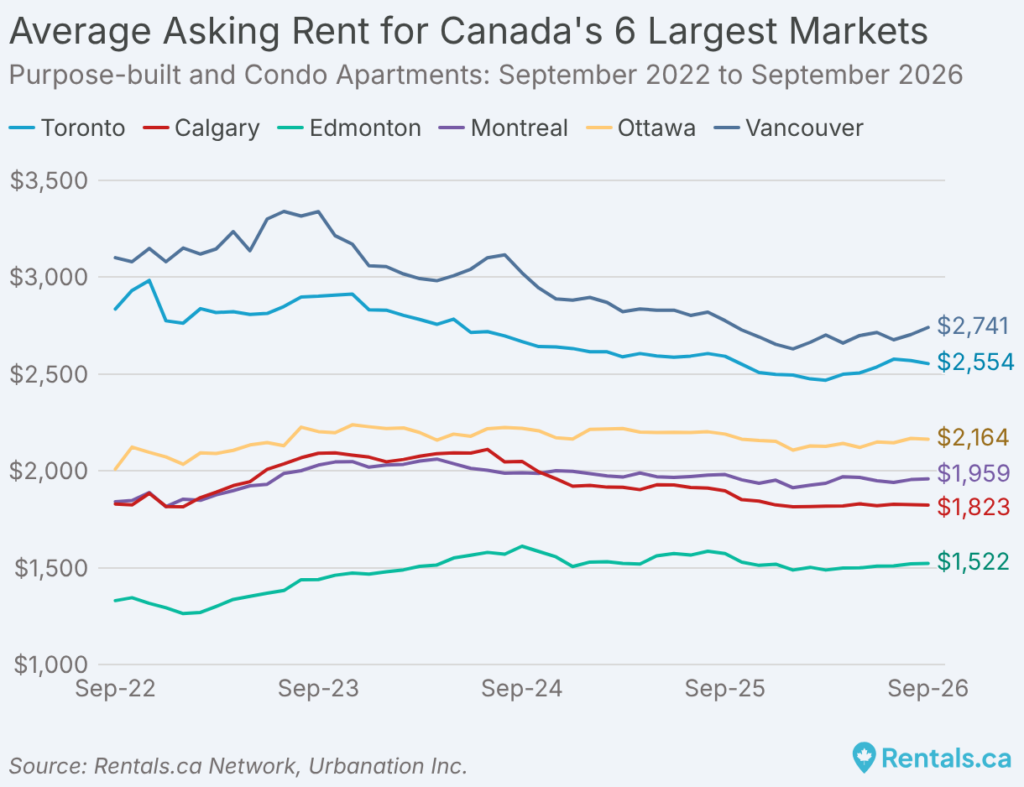
The average asking rent over all property types was $2,035 as of August 2026, according to Statistics Canada. One important note is that there is a lot of regional variation. Major hubs like Vancouver and Toronto are 25% higher than the national average, whereas Edmonton and Calgary both fall below. In the following chart, you can see the average price across all rental units across the biggest six cities in Canada over the past four years.
Are rents going up or down in 2026?
The short answer is that according the Statistics Canada, the August inflation data shows a national average rent price increase of 2.8% year-over-year, or 0.8% month-over-month. When considering all renters, 87% experienced an increase in their rent. For those that did experience the increase, about two-thirds saw under a 20% increase, with the other third seeing over a 20% increase.
When we look deeper at the rent price question though, it’s a mixed bag due to heavy dependence on the type of rental and the location.
Type: Apartment rentals, and especially high-end condo units, are in high supply right now, putting downwards pressure on prices. With this oversupply, we’re seeing plenty of incentives for renters to sign a lease in a new, high-end rental unit – think free parking, free internet, or even a signing bonus like a tv or cash. Overall, new purpose-built units are seeing rent decreases in many major cities.
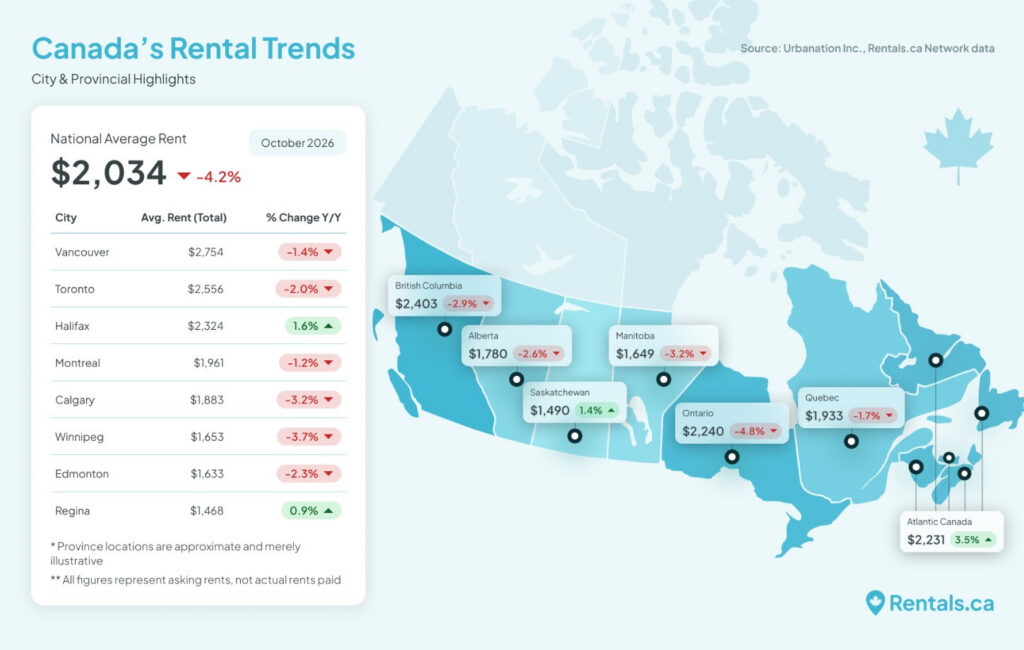
Location: Halifax is leading Canada’s major cities price increases. Vancouver, on the other hand, has seen the biggest decreases in the latest data, with Toronto and Ottawa following. The most recent data by province can be seen in the map below. Another factor impacting rent is the ongoing US trade dispute, with communities most impacted by the tariffs are seeing more substantial downward pressure on rents.
What are the latest trends showing?
Regionally, the major cities across Canada are seeing rent increases matching inflation rates, meaning we’re more or less in a balanced rental market.
One of the most important housing trends of the last decade is that renter households are increasing at a much faster pace than owner households. When comparing the 2011 census data to the most recent data from 2021, renter households grew by 21%, which is nearly triple the growth of owner households that were up 8%.
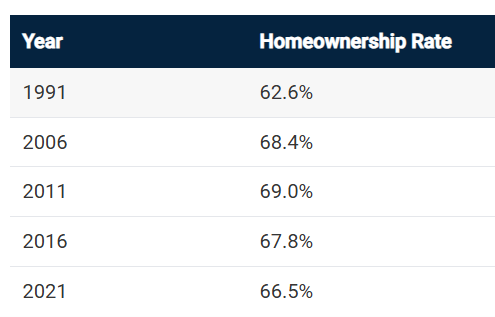
Another data point worth looking at is the changing home ownership rate. From the chart below, we can see a drop over the past 10 years.
One of the drivers behind this drop in home ownership is the portion of Canadians aged 25-39 who are married with children. In 1991, that accounted for 46.6% of people; however, by 2021 that number dropped to 26.6%. Additionally, the marriage rate among this age group fell from 58% in 1991 to only 35.3% in 2021.
Together, these two changes suggest both that this cohort is less likely to marry and form a household, and subsequently they are less likely to buy a home.
What do these trends mean for the housing market?
The delayed or decreasing household formation trend means that Canadians 25-39 who are still wanting to purchase a home, but are limited to one income, are more frequently opting for condos, as that’s what’s financially available with a single income.
Another trend is that home ownership is happening later, giving owners less time to build that home equity before retirement.
What’s the takeaway here?
Glad you asked! There are two groups of people who can really action this information, so if you’re one of them, or know someone who is, call me!
Current renters: The takeaway for you is that owning and renting are very similar in cost, coming in at about $2035 to rent and $2009 for a mortgage. However, owning has the key advantage of helping you save money every month and build equity in the long term. There are plenty of tax-free ways to save for a downpayment or use equity you (or your family) already have if that’s what’s holding you back. Let’s talk about options.
Investors looking for a rental property: If you’re looking to buy a rental property, it might be challenging to get the asking rent you want. A broker will help you position yourself to have positive cash flow in the current market by structuring your mortgage to match realistic rental rates and ensure you turn a profit before you commit to buying.
Ultimately, it’s a personal decision everyone has to make based on what’s possible and best for them. I’d love the opportunity to help you compare your options and see what makes sense for you personally!